Understanding Closing Costs: What Buyers Pay
Closing costs surprise a lot of first-time buyers. The CFPB puts a buyer's closing costs at about 2% to 5% of the price, on top of your down payment. On a $300,000 home, that is about $6,000 to $15,000. Sellers pay their own separate costs. Plan for yours from day one.
What is in closing costs?
- Lender fees. Origination or underwriting fees, plus any points you pay for a lower rate.
- Appraisal. The lender orders one to check the home's value.
- Credit report and other small loan fees.
- Title search and title insurance. Protects you and the lender if someone has a claim to the home.
- Recording fees and transfer taxes. Set by your state and county. Who pays them varies by area.
- Prepaids. Your first year of homeowners insurance, some property taxes and interest up to your first payment.
- Escrow deposit. A starting balance for the account that pays your taxes and insurance.
Where to see your real numbers
- Loan Estimate: you get it within three business days after you apply. It lists every expected cost.
- Closing Disclosure: you get it at least three business days before closing. Compare it line by line to your Loan Estimate and ask about anything that changed.
Ways to pay less
- Compare lenders. Put Loan Estimates side by side. Fees differ a lot.
- Ask the seller for a credit toward your costs as part of your offer.
- Shop your title company and homeowners insurance where your state allows it. The Loan Estimate shows which services you can shop for.
- Look for down payment and closing cost help. See how it works.
- Close near the end of the month to pay less prepaid interest. Ask your loan officer if it makes sense for you.
Protect your closing money
Scammers send fake emails with new wire instructions. Before you wire money, call your title company at a number you know is real. Never use a phone number from the email.
Quick answers
Who pays closing costs?
Buyers and sellers each pay their own. Sellers can agree to pay part of the buyer's costs. Sellers: see what it costs to sell.
Can closing costs be rolled into the loan?
Sometimes. Some loans let you finance certain costs, or take a slightly higher rate in exchange for a lender credit. Ask your loan officer to show both options.
Is earnest money part of closing costs?
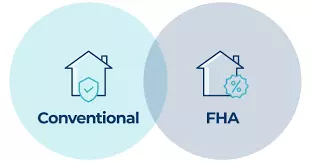
No. Earnest money is a deposit you put up when your offer is accepted, and it is credited back to you at closing toward your down payment and your costs. It is not an extra fee. See also down payment help and FHA vs. conventional.
Mortgage calculator · Get pre-approved · Home buying guide
Where you buy changes this
Closing costs are not one national list. Who pays which line is set by state law in some places and by local custom in others.
- Tennessee — the buyer pays the transfer tax, and borrowers pay a second tax on the loan.
- New Jersey — the seller pays the transfer fee, and over $1,000,000 N.J.S.A. 46:15-7.2 adds a second fee charged on the whole price.
- Georgia — an attorney runs the closing and borrowers pay an intangible tax.
- Texas — there is no transfer tax at all, and title premiums are set by the state.
- Florida — F.S. 201.02 charges $0.70 per $100, and Miami-Dade sets its own rate.
- North Carolina — you pay a due diligence fee to the seller that you do not get back.
We keep a page for every state we work in, with a cost table, a step-by-step timeline and the rules that actually trip people up. See all AXEN locations.
Sources and further reading
Updated September 18, 2026. We check these sources each time we update this guide. See our editorial policy.
Recent Posts